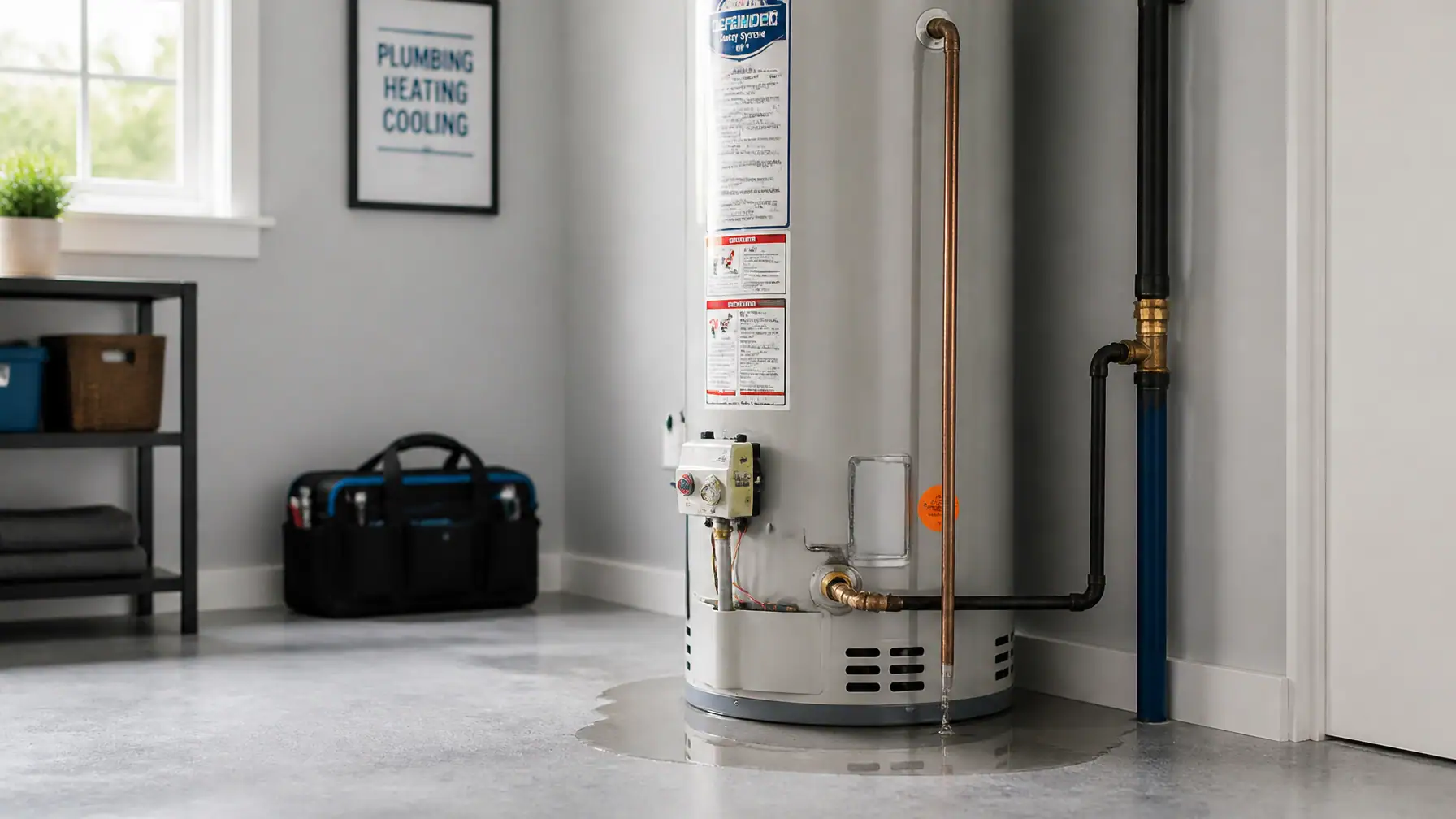
If you’ve discovered your water heater leaking from the bottom, you need to act quickly to prevent water damage and determine if you need a simple repair or a full replacement. A leak coming from the bottom of the tank usually means either a component like the drain valve has failed (repairable) or the internal tank itself has corroded and cracked (requires replacement).
At Accurate Backflow & Plumbing, we’ve served homeowners in Bradenton, Sarasota, and Manatee County for over 20 years. We’ve seen everything from minor drips to major floods. In this guide, we’ll walk you through exactly how to diagnose the problem and what your next move should be.
Why Is My Water Heater Leaking From the Bottom?
Finding a puddle in your utility closet or garage is never a great start to the day. When you see a water heater leaking from the bottom, the source isn’t always obvious. While it might look like the tank is failing, the water could be traveling down from a higher point.
In Florida, especially in areas like Lakewood Ranch and Parrish, our water quality can contribute to sediment buildup. This sediment settles at the bottom of the tank, causing overheating and eventually leading to corrosion. This is a common culprit when a water heater leaking from the bottom becomes a permanent problem.
Common Causes of Bottom Leaks
- Internal Tank Corrosion: This is the most serious cause. Over time, the protective lining of the tank fails, and the metal begins to rust through.
- Faulty Drain Valve: The plastic or metal valve used to flush the tank can become loose or crack.
- T&P Valve Discharge: The Temperature and Pressure Relief (T&P) valve has a discharge pipe that runs down the side. If it’s venting, water will pool at the bottom.
- Condensation: Sometimes, what looks like a leak is just moisture building up on the outside of a cold tank in our humid Florida climate.
7 Critical Steps to Handle a Leaking Water Heater
When you notice your water heater leaking from the bottom, follow these steps to stay safe and protect your home.
1. Safety First: Turn Off the Power
Before you touch anything, you must cut the power source.
- For Electric Heaters: Find your home’s breaker panel and flip the switch labeled “Water Heater.”
- For Gas Heaters: Look for the thermostat dial on the tank and turn it to the “Off” or “Pilot” position.
2. Shut Off the Water Supply
If the leak is significant, stop more water from entering the tank. Locate the cold water shut-off valve on the pipe leading into the top of the heater. Turn it clockwise until it stops. If you can’t reach it safely or the valve is stuck, you may need to turn off the main water supply to the house.
3. Identify the Source (The “Dry-Down” Test)
Wipe up the existing puddle and dry the outside of the tank with a towel. Wait about 15 minutes to see where the first signs of moisture reappear.
- Leaking from the top? It’s likely a loose fitting or pipe.
- Leaking from the bottom? Look closely at the drain valve and the bottom seam of the tank.
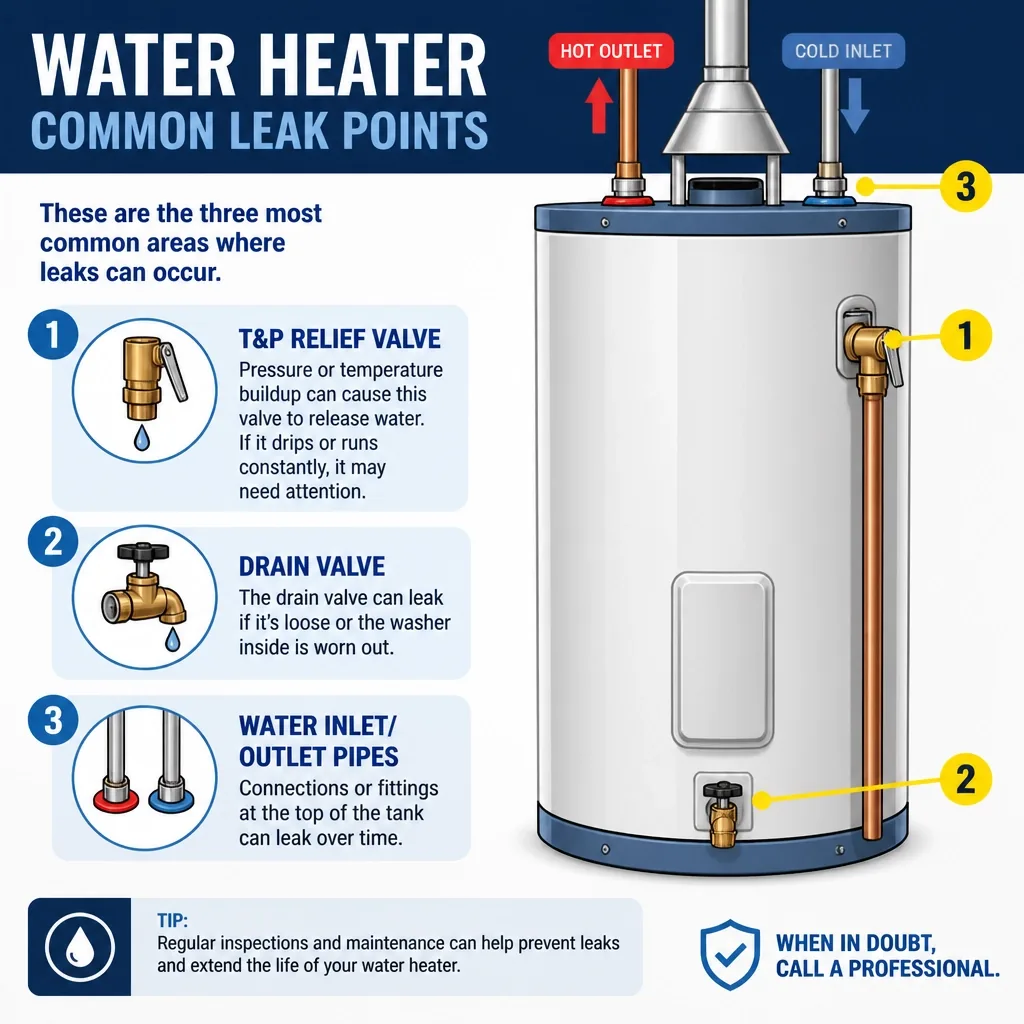
4. Inspect the Temperature and Pressure (T&P) Relief Valve
The T&P valve is a safety device located on the top or side of the tank. It has a pipe that points down toward the floor. If you see water coming out of the bottom of that specific pipe, the valve is doing its job by releasing excess pressure. However, if it drips constantly, the valve likely needs replacement.
5. Check the Drain Valve
The drain valve is the “faucet” at the very bottom of the tank. If you see water dripping from the spout or the threads where it connects to the tank, this is often a repairable issue. Sometimes, just tightening it slightly with a wrench can stop a water heater leaking from the bottom.
6. Examine the Bottom Seam for Corrosion
If the water is emerging from underneath the outer jacket or from the bottom seam of the metal, and all other valves are dry, the internal tank has likely failed. Because the tank is a sealed pressurized vessel, a crack in the inner lining cannot be welded or patched. At this point, you are looking at a water heater replacement.
7. Call a Professional Plumber
Unless it’s a simple loose fitting, most water heater issues require a licensed technician. Dealing with high-pressure hot water and electrical/gas connections can be dangerous for DIYers. We recommend calling a team that knows the specific water conditions of Sarasota and Manatee counties.
Repair vs. Replacement: What’s the Cost?
Knowing whether to fix it or swap it depends on the age of the unit and the location of the leak.
| Leak Source | Typical Fix | Estimated Result |
|---|---|---|
| Top Fittings | Tighten or replace pipes | Repairable |
| Drain Valve | Replace valve | Repairable |
| T&P Valve | Replace valve | Repairable |
| Internal Tank | None | Must Replace |
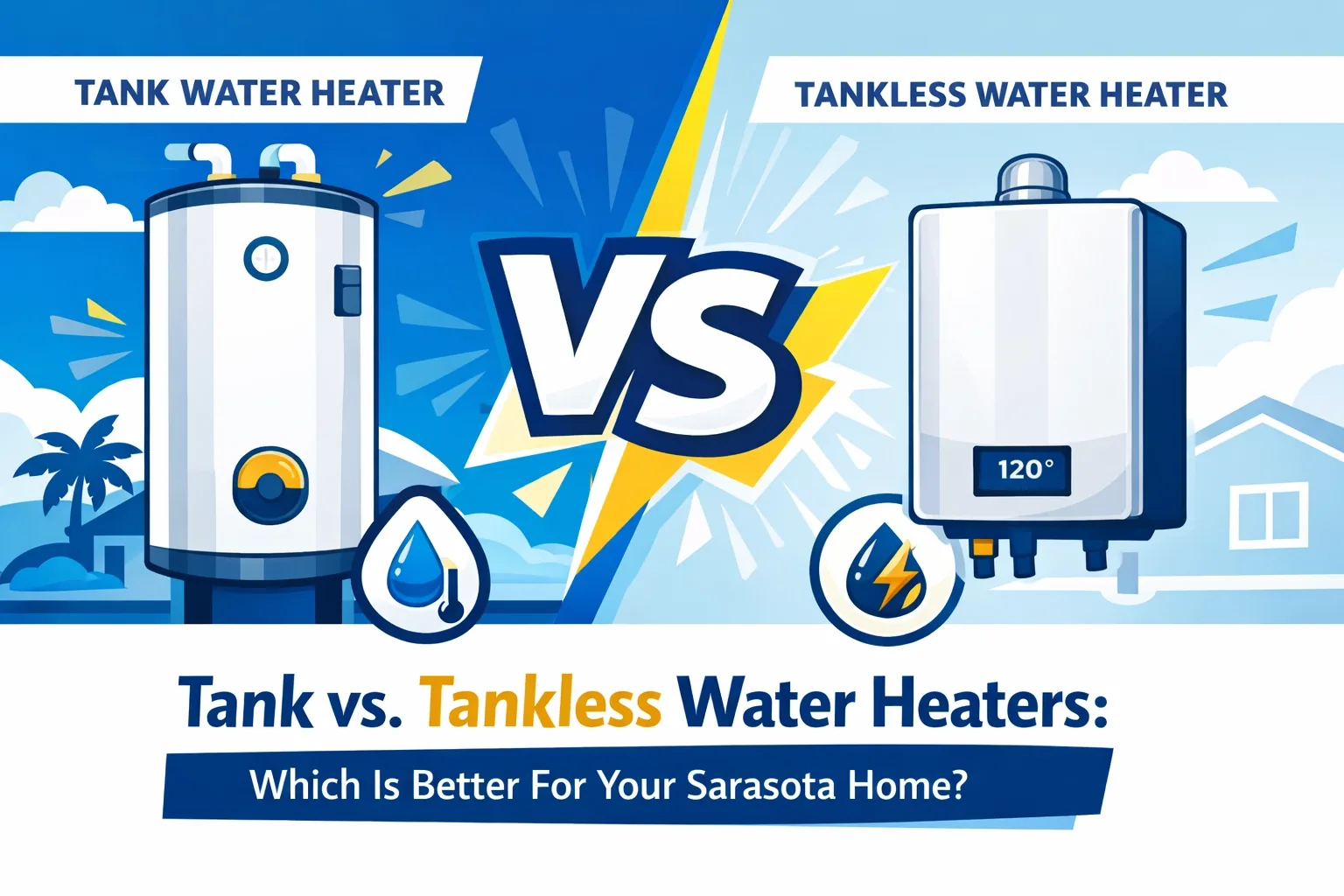
If your water heater is more than 8–10 years old and is leaking from the bottom due to tank failure, a replacement is almost always the more cost-effective choice. Newer models are significantly more energy-efficient, which helps lower your monthly utility bills. You might even consider switching to a tankless water heater for endless hot water and better space-saving.
Can I Prevent Future Leaks?
The best way to avoid the headache of a water heater leaking from the bottom is regular maintenance. Florida’s “hard water” is full of minerals that settle as sediment. We recommend:
- Annual Flushing: Draining the tank once a year removes sediment that causes corrosion.
- Anode Rod Inspection: This “sacrificial” rod attracts corrosion so your tank doesn’t have to. Replacing it every 3–5 years can double the life of your heater.
- Water Softeners: Installing a water softener can drastically reduce the mineral buildup that leads to premature tank failure.
To make this easy, we offer the Accucare Maintenance Plan. It includes an annual 52-point whole-home plumbing inspection, a water heater flush, and water quality testing to ensure your home stays dry and your family stays comfortable.
Why Choose Accurate Backflow & Plumbing?
When you’re dealing with a water heater leaking from the bottom, you need a team you can trust. We are a locally owned and operated company based right here in Bradenton. We pride ourselves on:
- Transparent Pricing: No hidden fees or “gotcha” costs.
- Expertise: Fully licensed, insured, and certified technicians.
- Experience: Serving the Sarasota and Manatee areas since 2000.
Whether you are in Anna Maria, Siesta Key, or downtown Sarasota, we can get to you quickly to diagnose your leak and provide a lasting solution.
Schedule Your Water Heater Inspection Today
Don’t wait for a small drip to become a major disaster. If you notice your water heater is leaking from the bottom, contact the experts at Accurate Backflow & Plumbing. We provide upfront pricing, 5-star service, and the peace of mind that comes with over two decades of local experience.
Accurate Backflow & Plumbing 1912 44th Ave E, Suite B, Bradenton FL 34203 Call us at (941) 518-6030 or schedule your service online today.